
[Reader, if you are just joining this journey, click on the “About” tab for context. The chronological posts begin in January 2026.]
Speaking of disrupting the everyday . . . you can click on this link to listen (in a different tab) to the French singer Sandrine Kiberlain’s song Le Quotidian. “Everyday life,” she sings, “is not enough for me.”
Meanwhile . . . in Malory’s text, he makes two asides in the midst of all the bustling preparations for war, just before Arthur arrives in Sandwich to rally the troops and commence the journey.
Aside 1:
And Sir Trystrams at that tyme he left with Kynge Marke of Cornwall, for the love of La Beale Isode–wherefore Sir Launcelot was passyng wrothe . . .

If you are not familiar with the tragic love story of Tristan and Isolde, you can read a summary here. Basically, it mirrors the love triangle of Guinevere, Lancelot, and Arthur. In Malory’s aside, Tristan makes the choice not to take up the great war campaign with Arthur and instead to be with his lady love. And Lancelot, that great equivocator between love and duty, is “passyng wrothe.” Why?
At this point in Malory’s tale, Lancelot’s love affair with Guinevere has not fully heated up. Lancelot places limits on his love — he is foremost a man of duty. The aside also indicates that the source of this tale in Le Morte Darthur doesn’t come from a romance. This part of the tale is a war campaign.
The condensed memoir by Wallis Simpson that I read last night is also a story of decisions governed by passion, albeit in the 20th century. In abdicating the throne to marry Simpson, Edward made a choice akin to that of Tristan — one which undoubtedly would have made Lancelot “passing wroth.”
But choosing duty first will become a harder decision for Lancelot, by and by.
Aside 2:
Than Quene Gwenyver made grete sorow that the Kynge and all the lordis sholde be departed, and there she fell doune on a swone, and hir ladyes bare [bore] hir to her chambir.
In this passage, Malory depicts Guinevere with a tender-heartedness that will be matched by her waiting welcome for Arthur at the conclusion of the war. Although . . . if you read the text closely, her fainting with love and anxiety here is not reserved for Arthur exclusively.
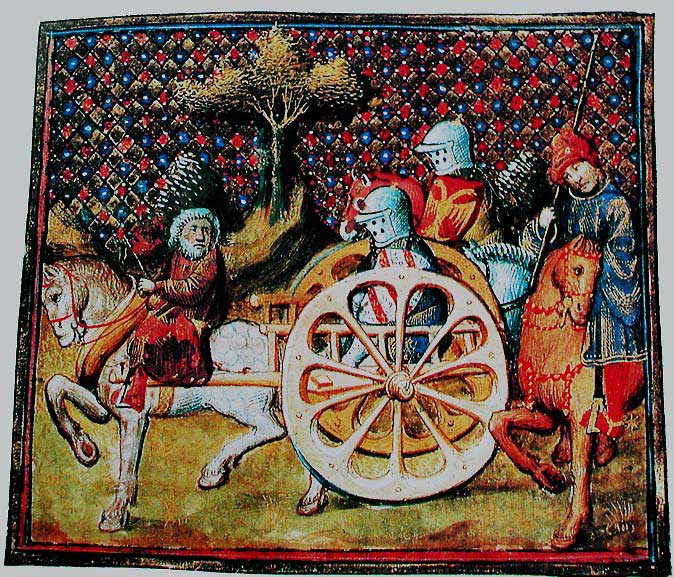
If you know the tale of the Knight of the Cart (Cretien de Troyes’ 12th century story), Lancelot’s indecision between love and duty is immortalized in the moment he hesitates to rescue Guinevere because it requires he get into a lowly prisoner’s cart. Guinevere spurns Lancelot for this indecision which seems a bit harsh. But, as a result, his love for her becomes primary . . . at least for a while.
Eventually, Lancelot’s equivocation means he achieves neither love nor full fidelity to the ideals of Arthur’s Round Table.
With these caveats on the tension between duty and love, it’s time to leave the River Stour and the lovely town of Sandwich. Now, the Roman War campaign commences in earnest. On to France.


